THE TARGET
0.71 g per 100 g, made up
Public Health England's 2024 targets ask for stock, made up as instructed, to average 0.71 g of salt per 100 g, with a maximum of 0.9 g. The targets cover cubes, granules, pastes and jellies.
See the numbers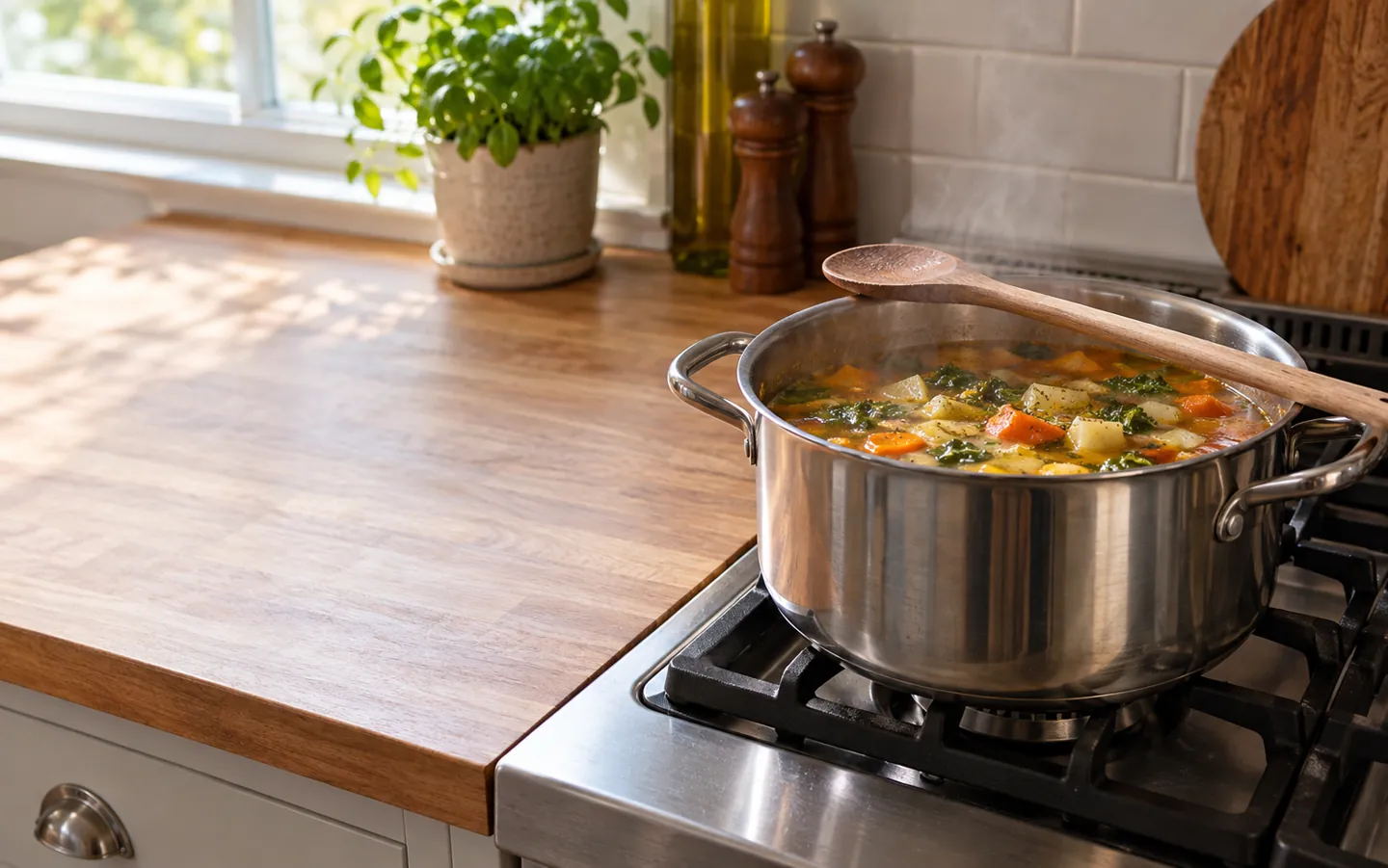
WHAT UK GUIDANCE SAYS
MADE UP is what counts
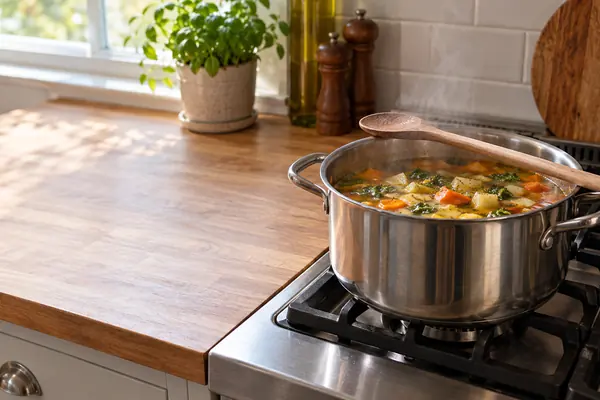
AI-generated image, not a photograph of a real person or place.
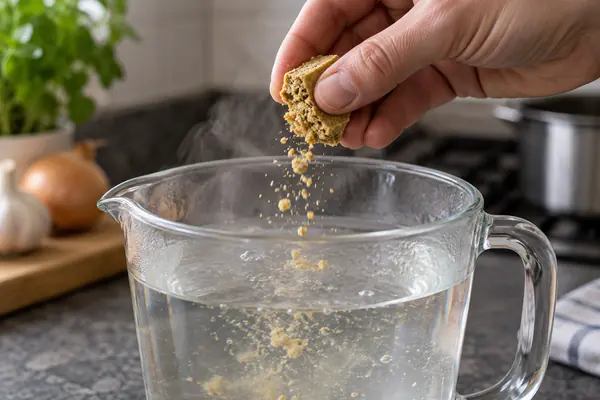
The NHS says stock cubes are often high in salt.
UK salt reduction targets set how much salt stock should contain once made up, and the NHS suggests choosing reduced-salt versions. A little label reading goes a long way.
THE SHORT ANSWER
Stock is salty by design.
Small swaps make a real difference.
THE TARGET
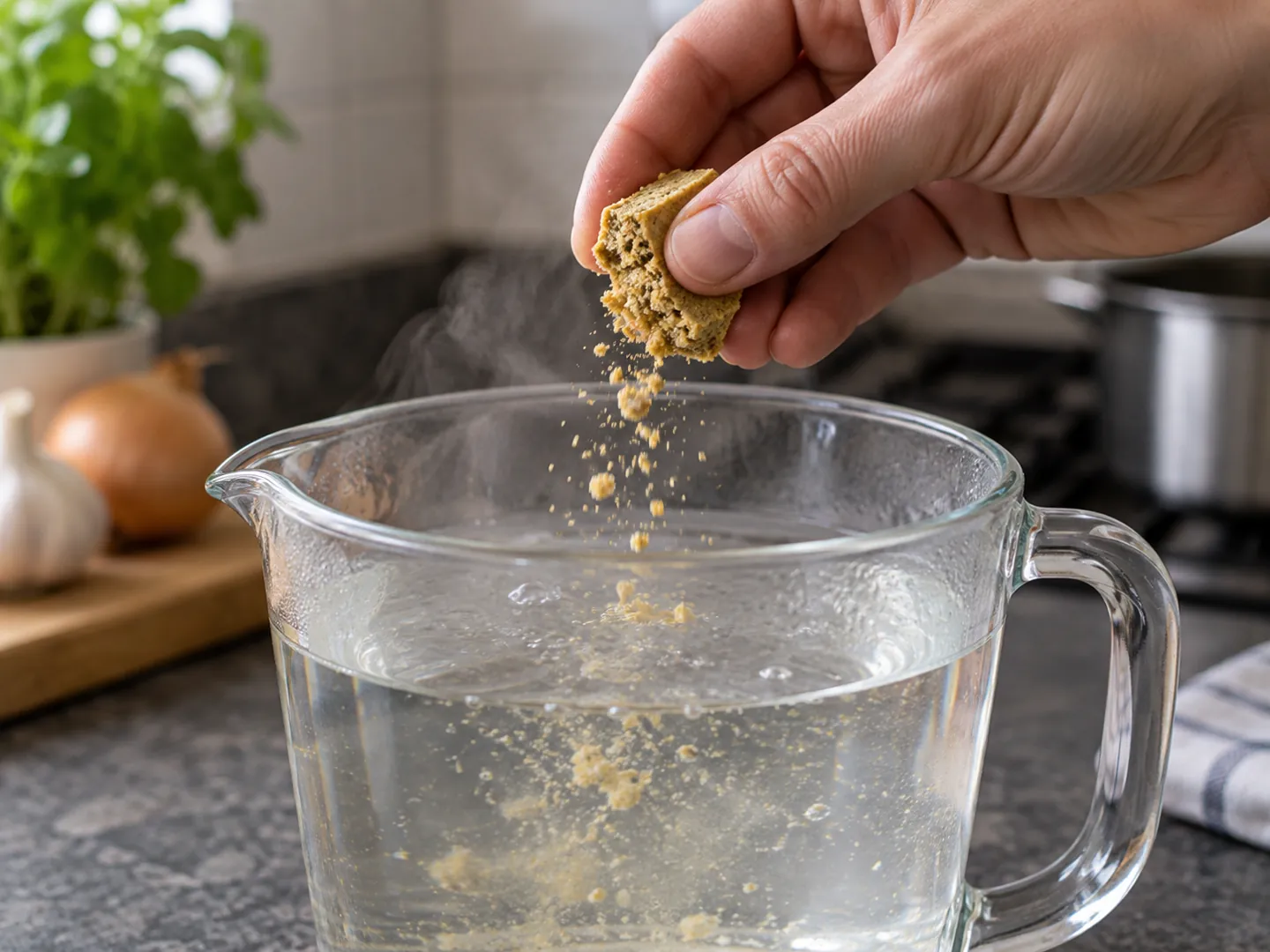
Public Health England's 2024 targets ask for stock, made up as instructed, to average 0.71 g of salt per 100 g, with a maximum of 0.9 g. The targets cover cubes, granules, pastes and jellies.
See the numbersTHE LABEL
The NHS calls a food high in salt above 1.5 g per 100 g and low at 0.3 g or less. Check whether a stock label gives figures as sold or as made up.
How to read itSWAPS
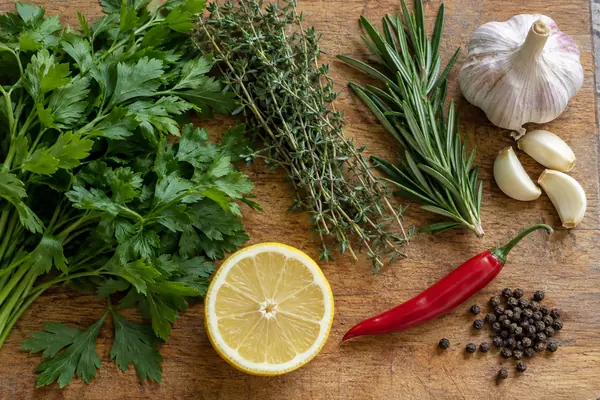
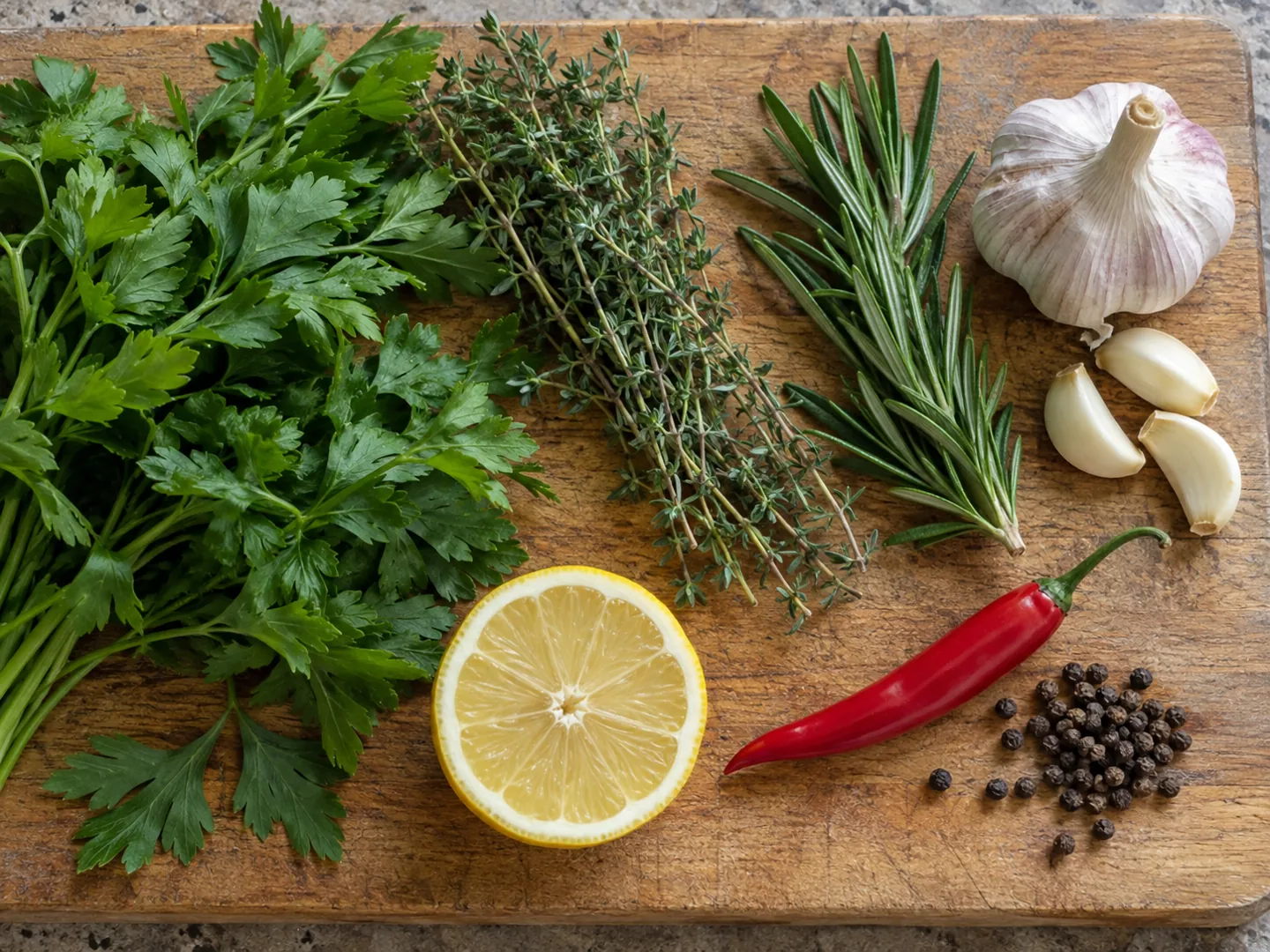
The NHS suggests low or reduced-salt stock cubes, and herbs, spices, black pepper, garlic, chilli or lemon juice in place of salt.
Check daily limitsGeneral information only, not medical advice. For advice about your own health, speak to a doctor, pharmacist or other qualified health professional.
FOUR LABEL HABITS
These habits follow the NHS advice on food labels and cutting down on salt.
Compare products using the salt figure per 100 g. Over 1.5 g is high, 0.3 g or less is low.
Stock figures may be given for the dry product or for stock made up as instructed. The salt targets use the made-up version.
Where the front of the pack is colour coded, the NHS suggests choosing green and amber labels for salt.
If you use stock, taste the dish before adding any extra salt, as the NHS suggests.
TWO NUMBERS WORTH KNOWING
One figure on where our salt comes from,
one on the adult daily maximum.
≈ ¾
Salt from packaged and everyday foods
The NHS says around three quarters of the salt we eat comes from packaged and everyday foods such as bread, breakfast cereals, meat products and ready meals.
HIDDEN SALT · NHS
6 g
Most salt an adult should have in a day
Around one level teaspoon. Too much salt can cause high blood pressure, which increases the risk of heart attacks and strokes.
DAILY LIMIT · NHS
At the 2024 average target of 0.71 g of salt per 100 g, 500 g of made-up stock would hold about 3.55 g of salt, more than half an adult's daily maximum.
A QUICK AGE CHECK
Pick an age to see the most salt the NHS recommends in a day, from all food including stock. The bar shows the daily maximum.
From the NHS page Salt in your diet. The limits include salt already in food as well as salt added in cooking and at the table.
THE REDUCTION TARGETS
Public Health England set salt reduction targets for 2024 across dozens of food categories, published in September 2020. For stocks, the average target fell from 0.75 g of salt per 100 g in 2017 to 0.71 g, and the maximum from 0.95 g to 0.9 g.
Gravy has its own targets: an average of 0.85 g and a maximum of 1.01 g of salt per 100 g as consumed. The NHS also lists gravy granules among sauces that can be high in salt.
In conversation
They can be. The NHS says stock cubes and gravy are often high in salt, which is why it advises against giving them to babies, and suggests low or reduced-salt stock cubes for everyone else.
Public Health England's 2024 targets ask for stock made up as instructed to average 0.71 g of salt per 100 g, with a maximum of 0.9 g per 100 g.
No. The NHS says not to add salt to a baby's food or cooking water, and not to use stock cubes or gravy, as they are often high in salt.
The NHS says more than 1.5 g of salt per 100 g (or 0.6 g sodium) is high, and 0.3 g or less per 100 g (or 0.1 g sodium) is low.
The NHS suggests herbs and spices, black pepper, garlic, chilli or lemon juice, tasting food before adding salt, and keeping salt off the table if you are cutting down.
Each figure on this page comes from the sources below.
ABOUT THIS NAME
doodlecubes.com is part of the DoodleSale portfolio. It isn't in an auction right now, but you can ask about leasing it.